quantifying structure and complexity
information quantity structureback to portuguese pipes and modern tracks with omiri
just a brief comment on my last post. some dating sites that don’t follow the rules i said work too, so don’t take my previous post too seriously. stats are out there and they tell many different stories. back to heavy topics, and please correct me if you find an error, today’s math is extra fancy
a long time ago, we began discussing structure as property of things. as previously summarized, we can think of things as letters in a gigantic soup called reality. structure is when, through stirring this soup, words come up. but how does one quantify structure? this is a big challenge that i’m currently embracing but haven’t put into good numbers yet. so for now, we will deal with our abstract quantity thing and not apply it to the physical reality, until this develops further. since we do not have any laws of physics that change our distribution of things, we will assume we are dealing with an entirely abstract system. this means letters have all equally likelihood of banding up with any other letters, and nobody adds letters or eats letters from the soup.
this means we can apply basic information theory. no special distributions, just letters, means that this specific arrangement  (our message) of the letters
  (our message space) is equal to
  . note that the base of the logarithm can be chosen, i chose 2 so we could use the SI unit bits. how does this arrangement compare to another, less specific, such as
  ? using the same math, we’ll get
  . here we can see that this quantity is intuitively coherent with the abstract idea of structure. to us, abc is more specific, more structured, than just ab. this is a key concept. note that in a miniverse like this one, there are no minds, so it is impossible for ab to represent any other concept and carry more information than itself.
now if we feed the concept of thing discussed previously as the letter of the above equation, we can apply it to (virtually) any structure in any layer of abstraction. but wait, didn’t i say layers were an illusion? yes. but i also discussed the need for compression. for example, to compute all the possible arrangements of all the atoms in a brick that is used to build a cathedral, one would have to calculate the information of the system as a whole. this would be the real quantity for the system. but since it is impossible to know all the possible states of all these atoms at a single moment in time, we will use things to solve the problem. here’s how.
consider that the information of brick a and brick b are, respectively, Ia and Ib. if they do not mix, i.e., their constituents aren’t switched at any point, we can assume that their information is independent. note that quantum physics tells us that this isn’t true, but for the sake of my margin of error, i won’t add the probability of an electron of a brick showing up in another brick. since they are independent, there is no mutual information, and therefore the total information of the system It is Ia + Ib. the total information of the two bricks is It, but not together. why? because bricks are being seen from another system, the cathedral which uses bricks as its constituents. therefore, bricks are the letters of a new message space. so this information, It, is the information that each brick has on its own, but not the entire system. let’s try to calculate the total information of a cathedral then. let’s conceive a very simple cathedral, with only 3 bricks and enough space for each brick in any orientation. if we now calculate all possible positions of the 3 bricks versus the single set of positions for the cathedral, we will obtain a new quantity, the information for the cathedral, which is, again,  . though it is possible to do the math, it already seems a bit more complex. the probability of a brick occupying a certain volume is
  (where b is brick and s is space). but the brick can be in any position, so we need to count the probability of a position versus all possible positions. let’s consider rotations around its own axis. we get a total rotation for
  , so a single orientation in all of these is
  where
where  is the smallest section of motion (let’s say it’s as small as planck’s constant). the likelihood of a position and orientation is, therefore,
  . this is for only one brick. for all three, it is now
  . the information for our tiny cathedral is therefore
  (the numerator is always bigger than the denominator). also, obviously, we consider the bricks don’t move around and that the whole thing isn’t zero (that would make it explode to infinity).
now for the prestige. if we accept abstraction as a part of our model of reality, the total information of a Cathedral made of N bricks is 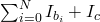 , where
  is the information of a brick and
  is the information of a whole cathedral, both greater than 0. the whole is bigger than the sum of its parts. we can also simplify it, if we assume all bricks have the same information, then
  .
.
but let’s be critical of this. the whole is only bigger than the sum of its parts if and only if the constituents of a system are seen from another system, i.e., if concepts and abstraction exist (or we use recursive things in my definition). if we consider nature, it has no concept of a cathedral, therefore, it is impossible to define what a cathedral is. for a mindless universe, or a mindless system, the whole is equal to the sum of its parts because there is only one set of symbols (the message space is all letters in the universe) and only arrangements of these symbols (the particular message is a local arrangement of these letters).
i know that this is a bit confusing, but this is the proof of how, depending on your axiomatic structure, you can end up with emergence or reductionism. as you can see, this is a simple proof, whose only “leap” is considering the bricks as constituents of another system. this, as we saw when we analyzed the concept ouroboros, is a consequence of our own way of dealing with the world, that requires us to use compression to fit information in our tiny minds.
so we could extract a quantity from the equations above, and if we use things, we can even quantify bigger, macroscopic structures and compare them to each other. as we saw above, a brick is less structured than a cathedral (has less information) for example. i will be building upon this from now on, and though i favor reductionism, both are compatible as it has been demonstrated.
 , that turns our circle with radius r into a rectangle with side
  and side b = r. our area is now
  , a very known formula. note that what i did was idealize a magic number that turns a circle into a rectangle (that number happens to be
  “. these terms used are idealizations, superficially true, but deeply false (hence the deepity). if any of these sentences was true, we would be talking of a total and complete understanding of nature, which is not the case.